
This time, we’ll share how to use dill, whose leaves are even longer and thinner than rosemary, in cooking.
Dill Growing Regions
Dill belongs to the same family as parsley and is a very slender plant, often described as feathery.
Dill can grow to about one meter tall, flowers, and emits a strong fragrance throughout.
Dill originates from southern Russia, the Mediterranean region of Europe, West Africa, and India, with Russians being the most frequent consumers of dill dishes, resulting in a very high annual consumption.
Dill is unique compared to other herbs because, in addition to its leaves, its seeds can also be used in cooking. Its seeds are brown and have a slightly bitter yet sweet citrus flavor, making them quite distinctive.
Dill and International Cultures
Even five thousand years ago, Egypt recorded dill as a medicinal herb with calming and analgesic effects. In ancient Greece and Rome, its healing properties made it very popular. According to records, dill can treat insomnia, relieve headaches, aid wound healing, and improve gastrointestinal discomfort. It was considered a symbol of wealth by the ancient Greeks and a source of fortune by the ancient Romans. Ancient Europe also has many legends associated with dill; for example, tea made from dill leaves and seeds could dispel the magic of evil witches.
Russians are perhaps the most enthusiastic about dill. A reporter from The Guardian mentioned that when he lived in Russia, he observed that Russians’ fascination with dill was such that it appeared in almost every dish, even pizza and Japanese sushi.
How to Grow Dill
Dill is easy to grow; it won’t grow very large if planted in small pots. Because it’s so easy to grow, people generally sow the seeds directly into the soil. Transplanting is not recommended as it can easily damage the roots.
Dill is cold-hardy and loves sunlight, so if kept indoors, place it near a sunny window.
After dill flowers and produces seeds, if the mature, brown seeds are not harvested, they will fall into the soil and sprout new dill plants. If you find new shoots growing next to the main plant, remember to transplant them to prevent them from competing for nutrients.
Harvested dill seeds can be used in cooking and also made into essential oil.
Cooking Applications of Dill
Fresh dill leaves are more fragrant than dried ones, so experts recommend using fresh dill leaves in cooking and adding them shortly before the dish is finished to avoid diminishing their aroma.
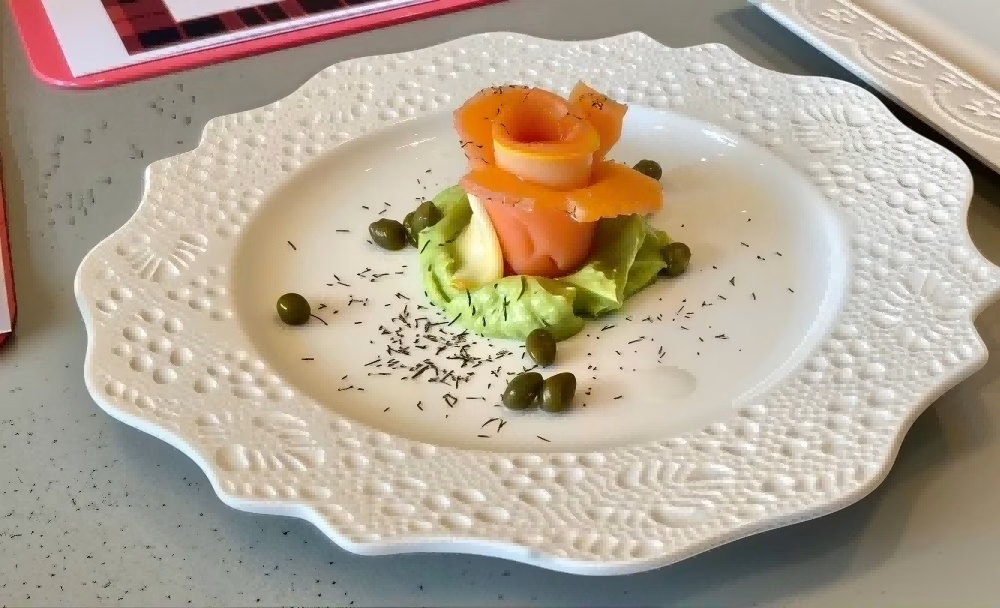
Dill leaves are best paired with fish, but they can also be paired with other ingredients, such as meats and vegetables, depending on your preference.
Europeans often like to add dill directly to salads, yogurt, cream, or other sauces, or even chop it up and sprinkle it directly on soups. Many culinary guides indicate that dill pairs best with salmon.
Unlike the leaves, which become less flavorful with prolonged cooking, dill seeds develop a richer flavor with longer cooking times.
Dill seeds are excellent for stews and simmers, and many recipes recommend sautéing them briefly before cooking to release their aroma. Dill seeds can also be used in seafood, pickles, bread, salad dressings, and vinegars. Below are some recipes using dill for your reference.

Leave a Reply